Clash of Clans Strategic War Framework
Clash of Clans is not just about building a strong village or unlocking powerful troops. When it comes to Clan War, victory depends on structure. The players who win consistently do not rely on luck or copied attack styles. They follow a system. A clear, repeatable strategic war framework transforms every attack into a calculated plan.
If you have ever entered a war attack feeling confident but finished with unexpected mistakes, you already understand the difference between power and precision. This guide helps you approach Clan War in Clash of Clans with clarity, discipline, and long-term consistency.
Strategic War Foundations
Before you choose troops or spells, you need the right mindset. Strategy always comes before action.
Many players focus only on hero levels, troop upgrades, or Town Hall progression. Those elements matter, but structured planning has greater impact. A strong foundation includes:
-
Evaluating risk before attacking
-
Understanding your position in the clan lineup
-
Choosing calculated targets instead of emotional ones
In Clan War, every attack affects the team. You are not playing solo multiplayer battles; you are contributing to a collective result.
Think of war like chess. You do not move randomly. You study the board. In Clash of Clans, that “board” is the enemy base layout. A framework ensures you approach each battle with intention.
Consistency is more valuable than risky attempts. A reliable strategy that secures steady stars helps your clan far more than unpredictable attacks.
Base Analysis Framework
Base analysis determines a large part of the outcome. Before selecting your army, pause and read the layout carefully.
Identify Core Defenses
Start by locating high-impact defensive structures:
-
Eagle Artillery
-
Inferno Towers
-
Scattershots
-
Clan Castle
These defenses define the base’s strength. Their position reveals how the base designer expects you to attack.
For example, if key defenses are centralized, you may need a controlled entry strategy. If they are spread wide, a wider deployment could work better.
Detect Structural Patterns
Most bases follow common structures:
-
Compact layouts
-
Ring bases
-
Island compartments
-
Anti-three-star designs
Recognizing these patterns saves time. Instead of guessing, you apply experience.
A ring base, for example, often requires strong funnel control to prevent troops from circling outside the core.
Map Entry Opportunities
Next, identify:
-
Safe funnel sides
-
Wall break angles
-
Air defense spacing
-
Potential trap zones
The goal is simple: create a clean path toward the center without splitting troops. In Clash of Clans, path control is often more important than raw damage.
When you analyze first and attack second, your decisions become precise rather than reactive.
Army Composition and Hero Integration Model
Once you understand the base, army selection becomes logical. Do not copy the latest popular strategy without adaptation. Choose your army based on the layout in front of you.
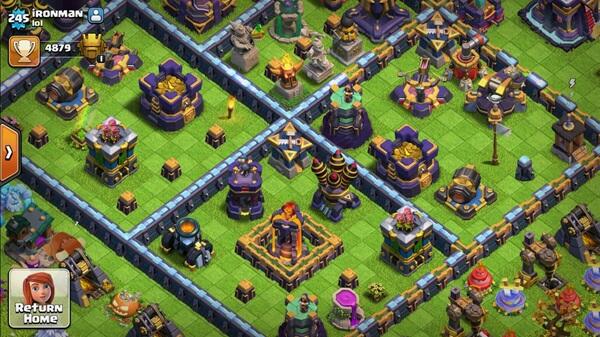
Army Selection Logic
Ask yourself:
-
Is this base stronger against air or ground?
-
Are compartments tight or open?
-
Is there clear value for a Queen Charge or similar controlled entry?
Ground-focused attacks work well against compartment-heavy bases. Air strategies can succeed when air defenses are exposed or poorly spaced.
The key is alignment. Your army must match the base, not the trend.
Hero Role Allocation
Each hero plays a defined role:
-
Barbarian King: Funnel support and tanking
-
Archer Queen: Precision damage and core access
-
Grand Warden: Protection and survival timing
-
Royal Champion: Targeting critical defenses late
Heroes should work as a coordinated unit. Activate abilities at moments of high defensive pressure, not automatically.
Spell and Siege Structure
Spells are not backup tools. They are core elements of your strategy.
-
Rage increases damage and speed during critical moments.
-
Freeze pauses dangerous defenses temporarily.
-
Invisibility allows key units to survive intense damage.
Siege Machines should create access or distract strong defenses at precise times.
In Clash of Clans, synergy between troops, heroes, spells, and siege equipment defines execution quality.
Execution Architecture
Even the best plan fails without disciplined execution. A structured attack follows three phases.
Funnel Creation
The funnel determines troop direction. Remove outside buildings to guide your main force toward the intended entry.
Without a proper funnel, troops drift. That drift leads to lost control.
Take your time during this phase. A few seconds of careful setup prevent major mistakes later.
Core Penetration
This is the decisive stage.
Key actions include:
-
Activating hero abilities under pressure
-
Layering spells at critical defensive zones
-
Protecting high-value units
Avoid panic reactions. If you use all spells too early, your army may collapse near the core.
Execution requires rhythm. You deploy, observe, and adjust calmly.
Cleanup Control
Many attacks fail due to time management. Preserve a few troops for cleanup duties.
Monitor destruction percentage and remaining buildings. Efficient cleanup prevents time failures and secures stronger results.
Strong attacks in Clash of Clans are controlled, not rushed.
Clan-Level Strategic Coordination
Clan War is a team effort. Individual skill matters, but coordination amplifies success.
Target Assignment Logic
A strong clan balances risk:
-
Strong attackers may handle higher-value targets.
-
Mid-level players secure safe stars consistently.
-
Backup plans cover unfinished bases.
Distribution reduces pressure on a single player.
Attack Order Structure
Early attacks reveal trap locations and defensive tendencies. Later attacks can adapt based on new information.
Smart sequencing improves overall performance.
Communication Model
Clear communication increases efficiency:
-
Share attack plans before executing.
-
Discuss strategies constructively.
-
Offer calm feedback after each war.
When coordination improves, star efficiency across the clan rises naturally.
War Performance Optimization Cycle
Improvement does not come from repetition alone. It comes from analysis.
Replay Review Framework
After each war, review your attack:
-
Did the funnel work?
-
Was hero timing correct?
-
Were spells used efficiently?
-
Did troops follow the planned path?
Honest evaluation accelerates growth.
Error Classification
Most mistakes fall into three categories:
-
Planning errors
-
Execution errors
-
Adaptation errors
When you identify the category, you can adjust precisely.
Adjustment Model
Refine:
-
Entry angles
-
Spell count
-
Hero timing
-
Army balance
Track consistency over multiple wars. High-level players in Clash of Clans focus on repeatable efficiency rather than occasional perfection.
Conclusion
A true Clash of Clans Strategic War Framework turns Clan War from unpredictable battles into structured operations. By combining base analysis, army logic, phased execution, clan coordination, and continuous review, you create a system that works repeatedly.
Victory in Clash of Clans is not about one perfect attack. It is about building a process you can trust every time you enter battle.